transforming crm. application - deal express.

client citi bank
industry financial services
duration 2017 - 2024

my role lead ux architect

tools figma, html/css, miro, appzillon
methods heuristic evaluation, design thinking workshops, agile sprints, design system integration
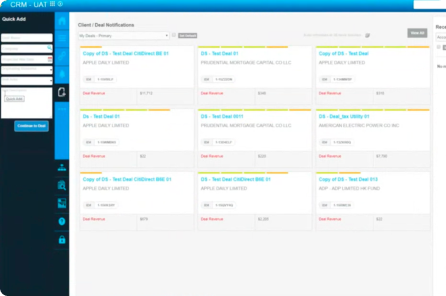
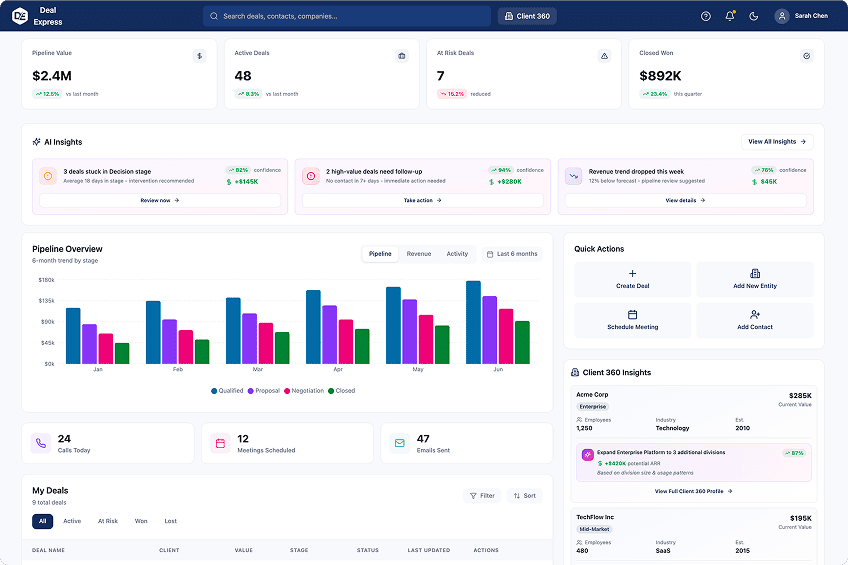
Deal Express dashboard shown in the dark theme
Deal Express dashboard shown in the light theme
light dark

drag to compare the dark & light themes — both ship wcag 2.1 aa

see it live

project overview

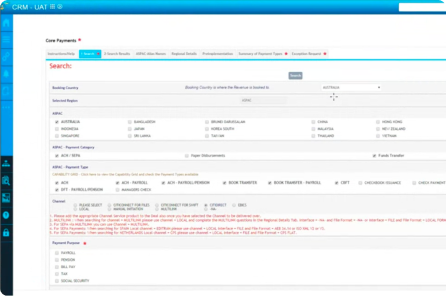
citi's crm application is a multi-million-dollar b2b platform supporting global sales and product owners in converting prospects into profitable deals. the system enables up-selling fintech services, enriching deals through multiple sales-cycle stages before implementation and integration with the client portal.

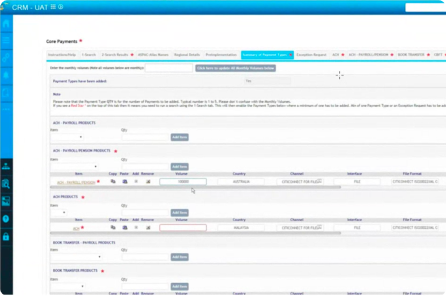
however, over time, the tool had grown complex and inconsistent - slowing down deal progress and frustrating global users spread across multiple time zones.

"even a simple deal update meant navigating between five screens… it felt like chasing your own tail."

my role as lead ux architect was to redefine the experience end-to-end - from research and workflow redesign to design-system integration and developer collaboration - within an agile environment spanning teams in london, new jersey, toronto, pune and chennai.

research& findings

research & findings

key challenges

  • each product's front-end development took nearly four weeks, delaying releases.
  • product owners worked in isolated time zones, creating siloed decisions.
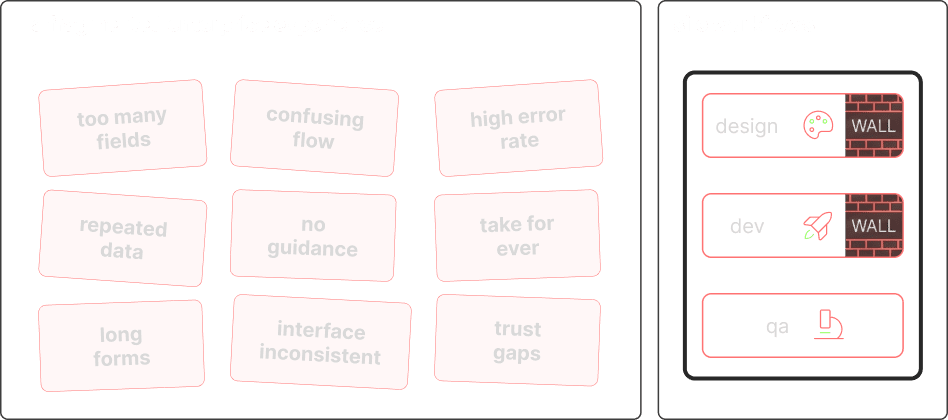
  • too many questions per deal form led to human error and data inconsistency.
  • users had no visibility into deal progress or value.
  • manual workflows and redundant data entry increased friction.

research approach

  • heuristic evaluations of existing workflows
  • system eco study
  • global stakeholder interviews with sales, approvers, and product owners
  • cognitive walkthroughs to identify mental load and friction points
  • task analysis and user journey mapping in miro

this research revealed a pattern

  • the system asked users for information it already had.
  • users' frustration wasn't just about usability - it was about repetition and distrust.
"what my research revealed - it wasn't the users failing the system, it was the system failing to remember."

what users struggled with - across roles and regions

aggregated pain points from 3 regions, 4 user groups, and 22 interviews.
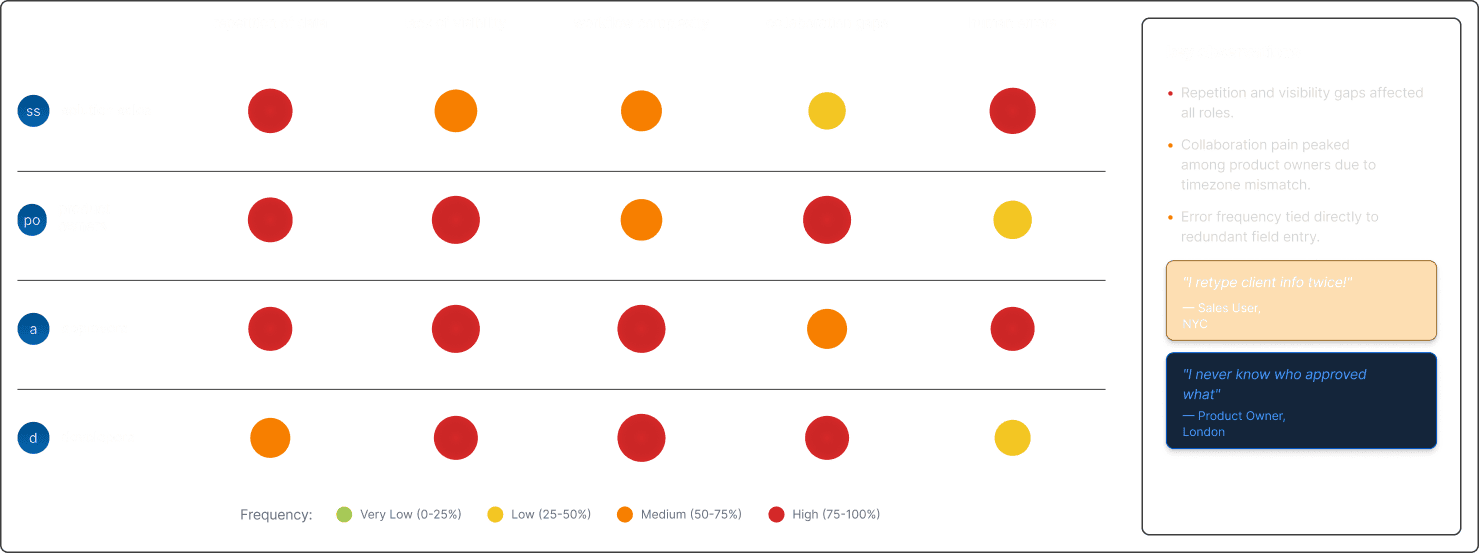
Pain-point frequency heatmap across four user roles and five pain categories, with key observations

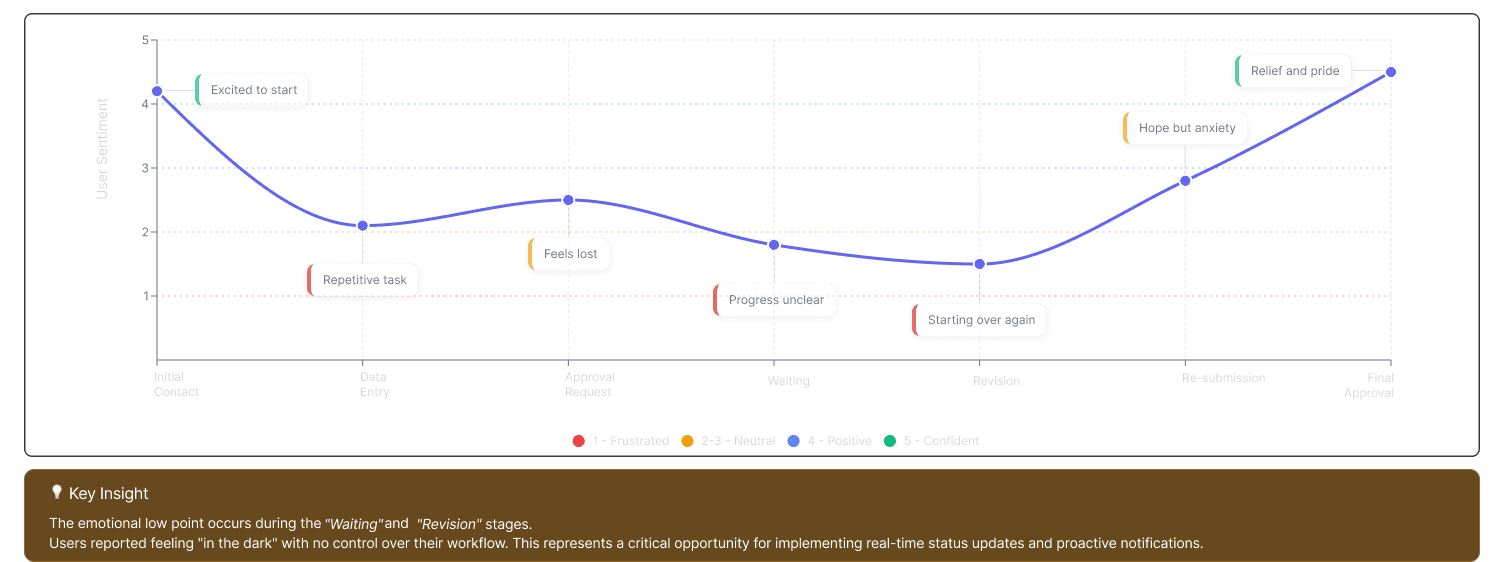
the emotional journey through deal approval

tracking user sentiment across key workflow stages - revealing pain points through emotional storytelling.

Line chart of user sentiment across deal-approval stages, dipping during waiting and revision

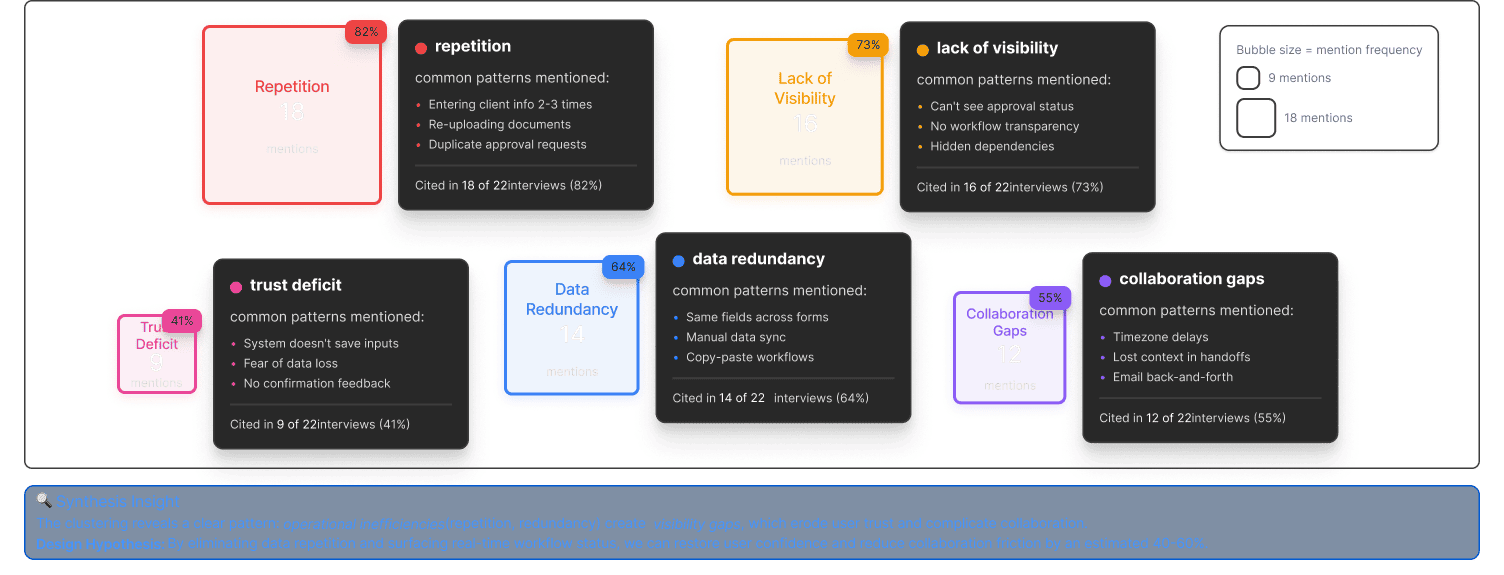
research synthesis - theme clustering

across 22 interviews, five dominant themes surfaced - forming the backbone of our design hypothesis.

Theme clustering of five dominant research themes sized by mention frequency, with synthesis insight

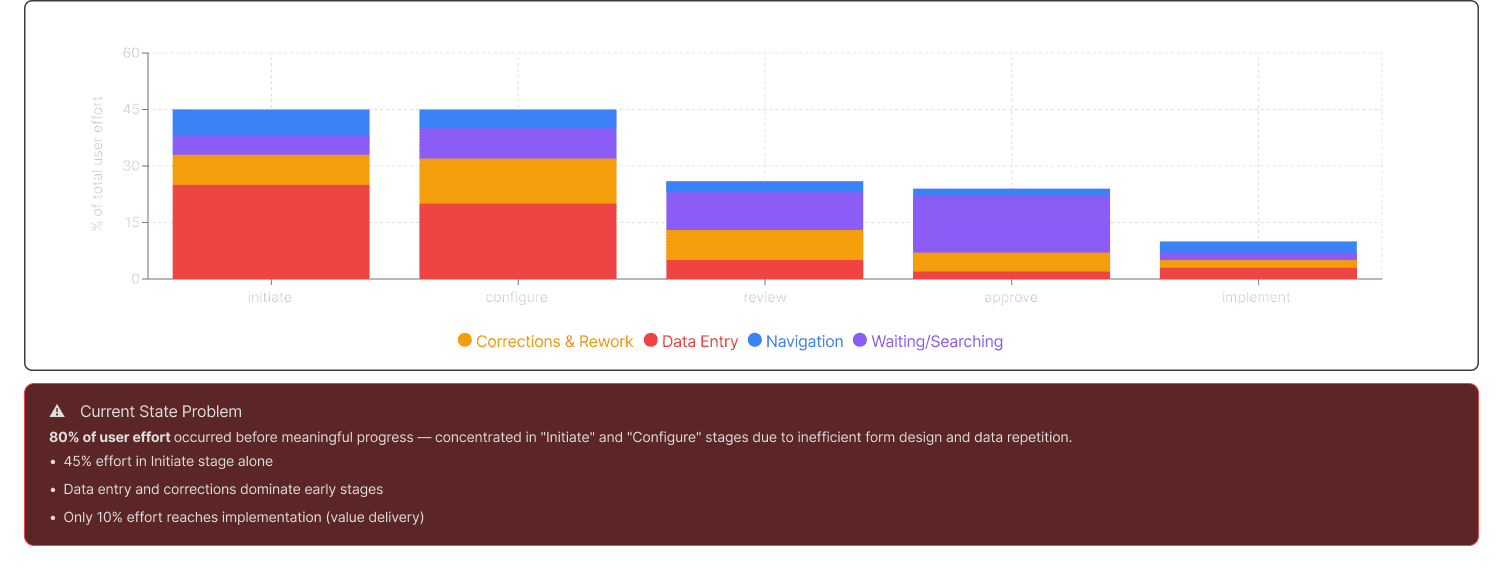
cognitive load distribution - where users spend their effort

mapping user effort across workflow stages reveals front-loaded friction and opportunities for efficiency gains.

Stacked bar chart of user effort by workflow stage, concentrated in initiate and configure

research takeaways

complexity bred inconsistency

the crm had evolved over years of incremental updates - each product added its own flow, leading to inconsistent ux patterns and redundant data entry.

user effort outweighed value

sales users spent more time feeding the system than selling. manual workflows and repetitive questions drained productivity and confidence.

voice of the user was missing

global product owners spoke for users, not with them. regional differences in process and time zones made feedback fragmented and delayed.

forms revealed cognitive overload

heuristic evaluations uncovered long, unstructured forms with repetitive fields - forcing users to re-enter known information and increasing error rates.

lack of contextual awareness

the system failed to leverage existing client data or deal history - users couldn't benefit from pre-populated answers or smart defaults.

trust gap between ux and tech teams

users felt unheard, and developers struggled to see the ux intent behind screens - revealing a clear need for design-system governance.
workflow opacity created anxiety

users couldn't track deal status easily. the lack of clear progress indicators led to uncertainty, repeated follow-ups, and support calls.

siloed collaboration hindered alignment

time zone gaps among product owners caused decisions to happen in isolation - resulting in inconsistent priorities and slower delivery cycles.

foundational insight emerged

repetition and ambiguity were not usability issues - they were systemic communication problems.
ideation& design thinking

ideation & design thinking

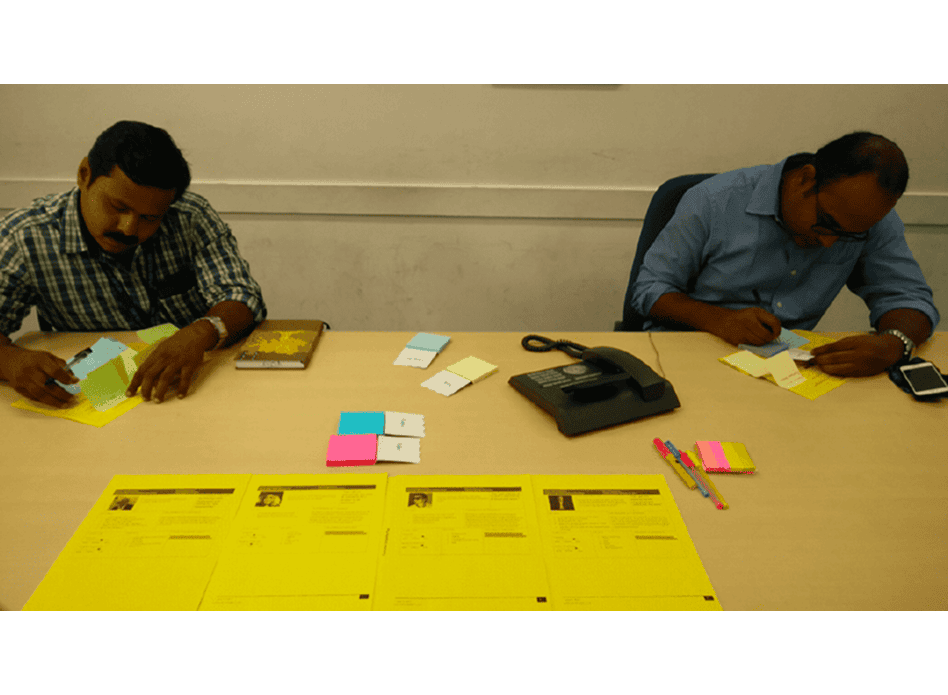
Co-creation workshop — participants sketching deal flows on paper at a table
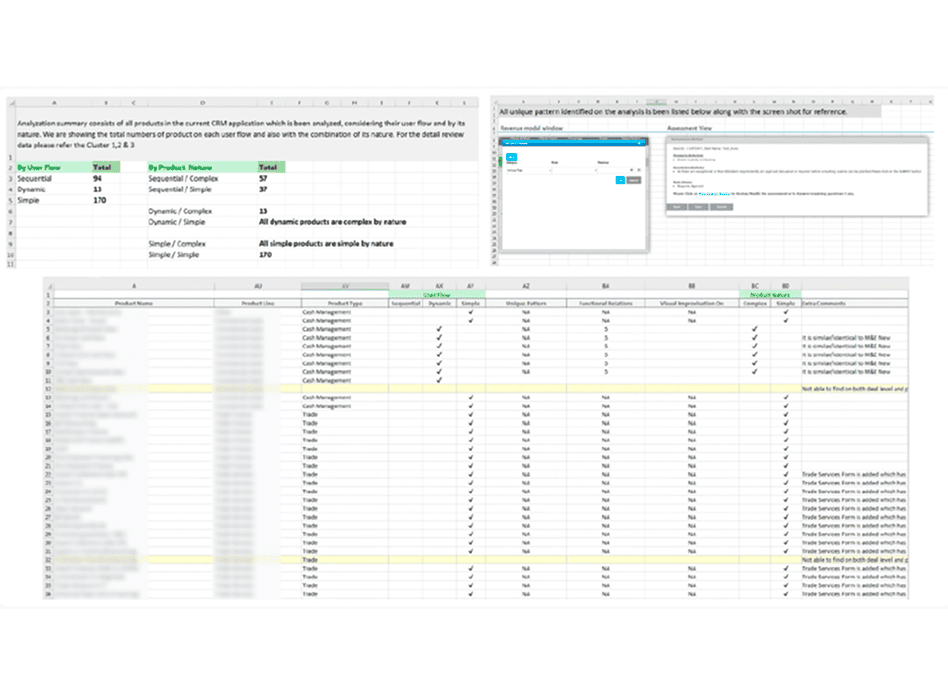
Spreadsheet analysis classifying products by flow type and complexity
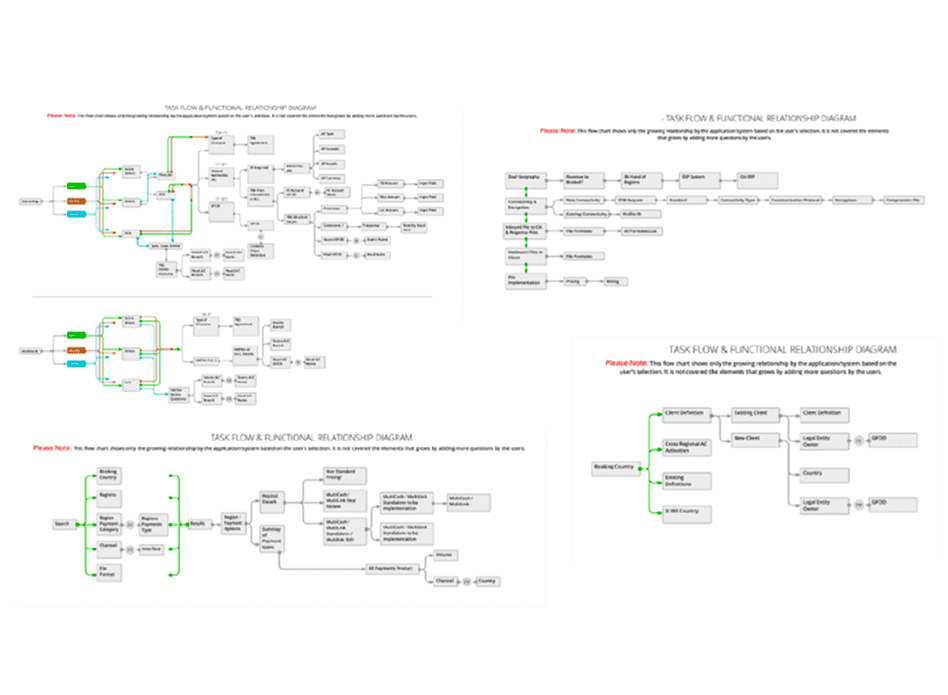
Task flow and functional relationship diagrams mapping the deal workflow
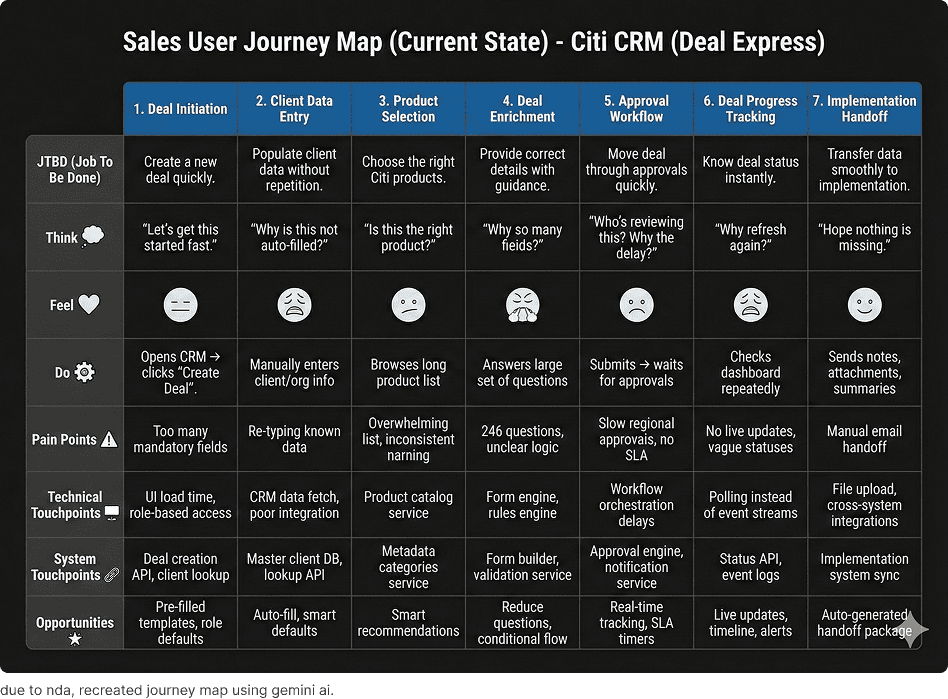
Sales user journey map (current state) for Citi CRM Deal Express — recreated under NDA using Gemini AI

design system

design foundations
"unified design language across crm modules."

i established the core foundations of the design system - colour, typography, spacing, elevation, and interaction tokens - mapped directly to production code. these foundations created a single source of truth across all crm modules, enabling visual consistency, accessibility, and rapid ui assembly.
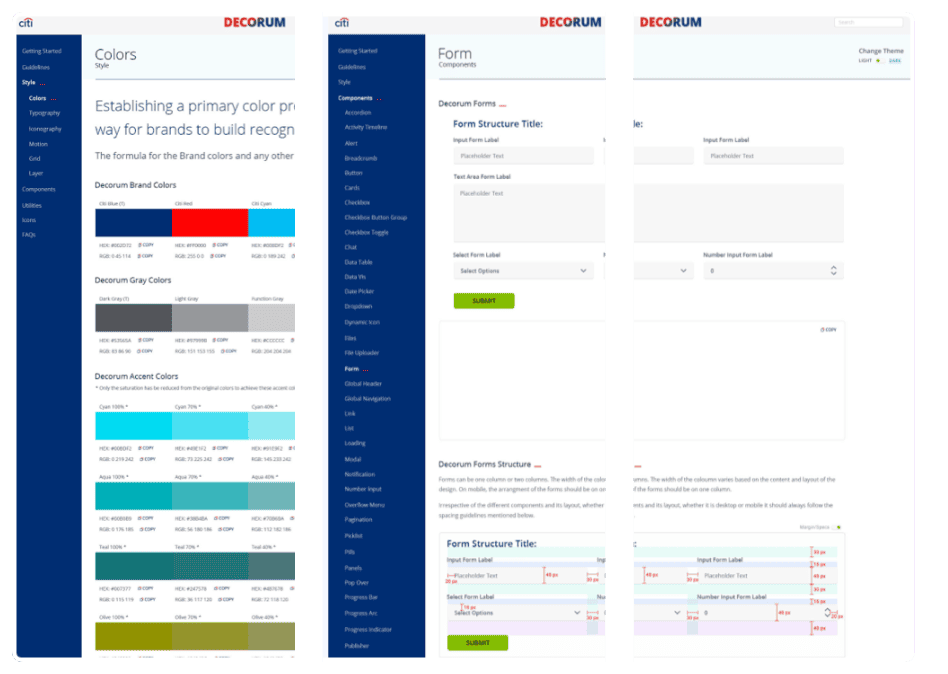
DECORUM design system — colour styles, form components, and themed form layouts

design system

design–to–code pipeline
"introduced a design-to-code workflow integrated with storybook and ci/cd pipelines."

frontend teams reduced build time from 2 weeks to 4 days using reusable templates.
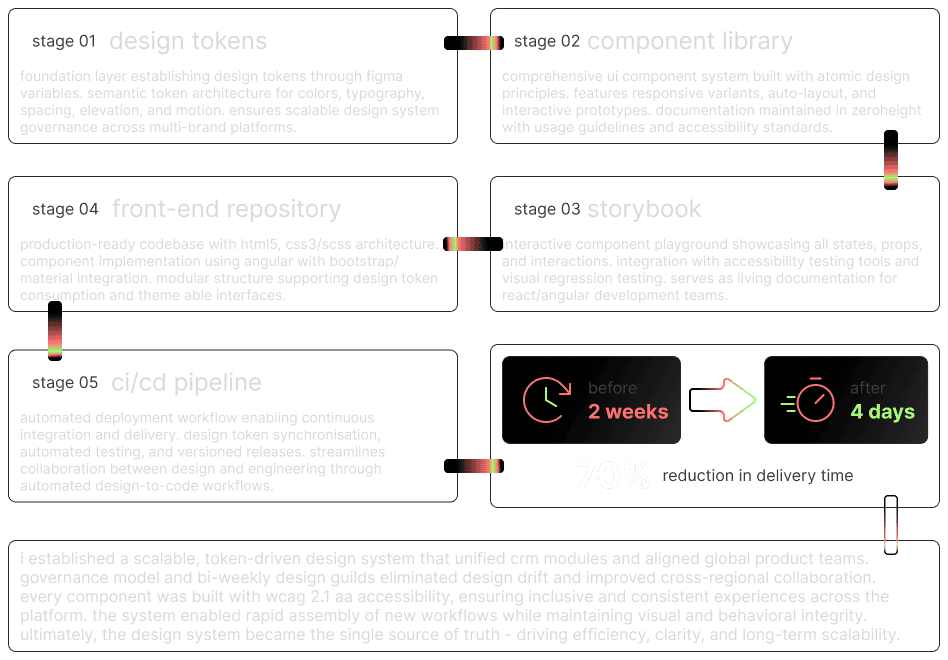
Design-to-code pipeline — five stages from design tokens to CI/CD, with a 70% delivery-time reduction
challenge&achievements

challenge & achievements

A fragmented enterprise experience — too many fields, confusing flow, high error rate, and siloed design/dev/qa workflows
  • inconsistent ux patterns and repetitive workflows
  • sales users spent more effort feeding the system than closing deals
  • user feedback fragmented across regions
  • forms caused cognitive overload and repeated data entry
  • no contextual intelligence → no smart defaults
  • trust gap between ux & tech
  • missing documentation; no self-serve knowledge
  • slow 4-week frontend cycles creating delivery bottlenecks
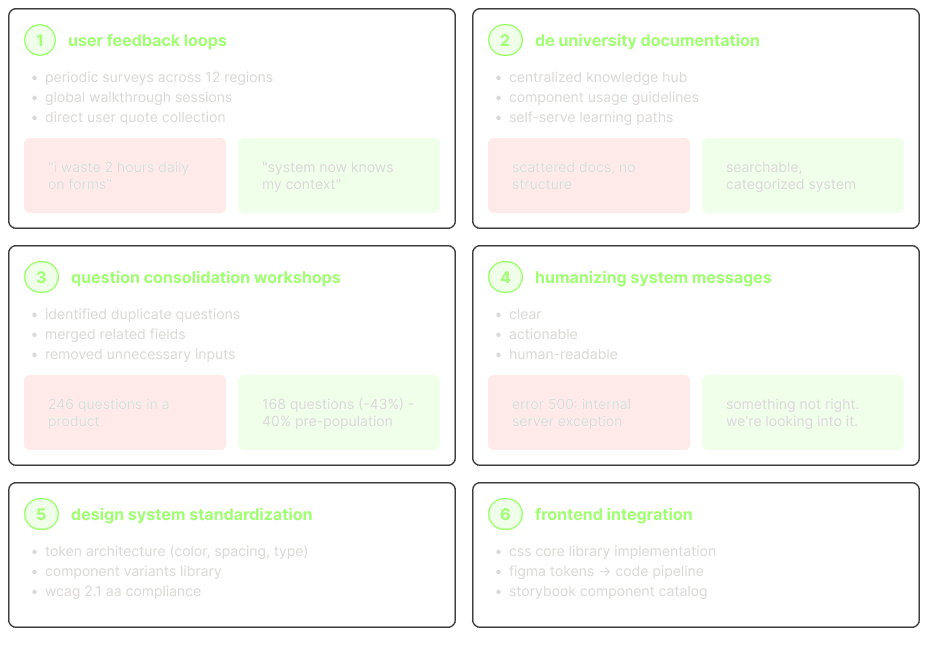
Response: solving problems at system level — user feedback loops, documentation, question consolidation, humanized messages, design-system standardization, and frontend integration
Impact: a more intelligent, efficient crm — 47% fewer support calls, 56% fewer usability issues, 68% fewer data-entry errors, 43% fewer form questions, 40% fields pre-populated, 70% faster frontend cycles
"a once-fragmented platform became a responsive, insight-driven system."

overview & take away

Overview comic — global CRM at scale, the aha moment, design-system integration, collaboration & ideation, impact metrics, and a reflection quote

overview & take away

designing in a living, global ecosystem

this project taught me how to scale ux strategy across a multi-region, multi-system financial ecosystem.

i learned to:
  • identify and align diverse stakeholders
  • transform research insights into operational systems
  • bridge ux–tech gaps through shared governance
  • decode technical complexities and present them simply to users
  • build design systems that scale across teams, regions, and products
designing for a global financial ecosystem means understanding not just users, but their interconnected systems. this project taught me how to navigate multi-region workflows, align diverse stakeholders, decode complex data relationships, and translate them into clear, scalable design strategies. it remains one of the most challenging and rewarding engagements i've led.
it remains one of the most demanding and rewarding engagements of my career-where design, technology, governance, and human behaviour had to converge to create meaningful impact.